|
China - The Middle Kingdom Six Degrees of Kublai Khan |
||
|
|
||
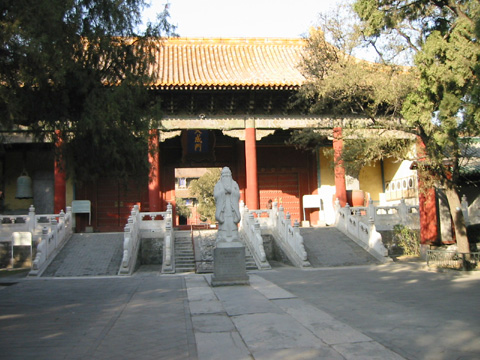
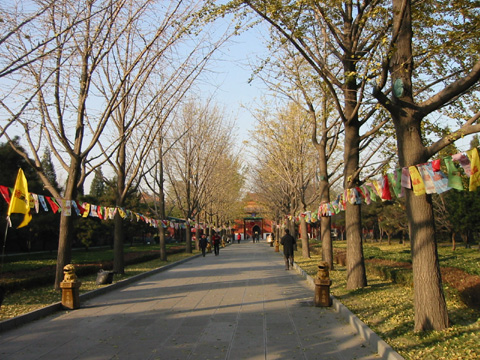
| Confucian Temple - Confucius says "A gentleman regrets leaving no name when he is gone". Confucius lived from 551 BC to 479 BC. He was a moral and political philosopher during the age of barbarism. His ideas were institutionalized later by his disciples and was adapted into a gentry-scholar political system used by the Imperial dynasties to rule China. This temple was originally built by Kublai Khan in 1302. The Mongols actually liked what Confucius had to say and created a Neo-Confucian political system that was used until the Qing dynasty. | ||
|
|
 |
|
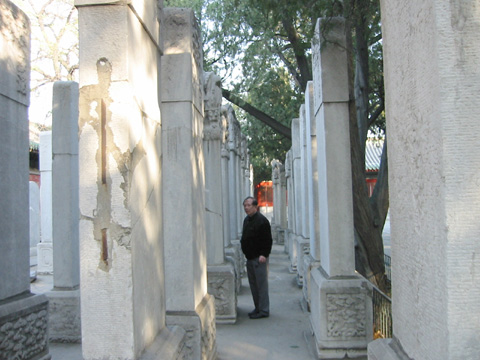
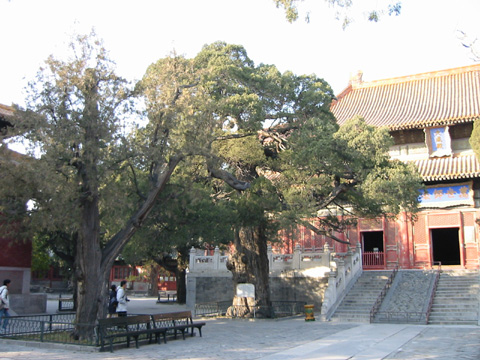
| Stone Temple Pilots - Here are the many stone pilots with inscriptions of Confucian scholars. Many have been damaged over the years from weather erosion and the Red Guard during the Cultural Revolution. There are 198 of these pilots with 51,624 names inscribed of those who passed the Imperial exams to become a scholar-elite. Anyone could take the exams, which enabled a socially mobile class system. What goes up must come down. | The Oldest Tree in China - Here is a 700 year old tree planted by a Confucian disciple. During the time of Kublai Khan ruled China during the Yuan dynasty. | |
 |
 |
|
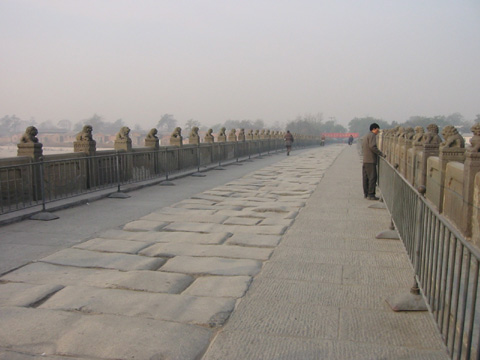
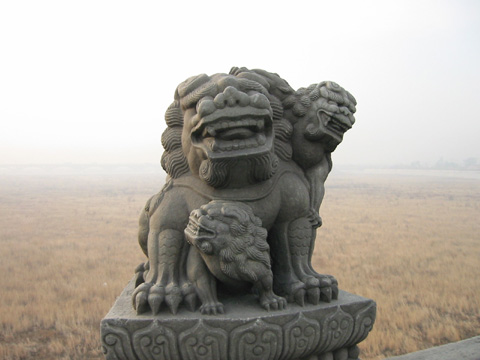
| 12th Century Bridge - The Marco Polo Bridge 16 km SW of Beijing. Marco Polo wrote in his diary about this bridge built in 1192 and was impressed by its grandeur. The bridge was then referred to as the Marco Polo Bridge by westerners. Marco Polo was an advisor to Kublai Khan's court from 1275 to 1291. The bridge is 260 m long with 250 marble posts with 485 lions. You can see the original stone blocks in the middle. This was also the site where the WWII started for China and Japan on July 7th, 1937. | Marble Lions - 3 of the 485 carved lions. The raging river is no longer. Due to a sinking water table, the Beijing government damned the river it is now a dry flat bed of grass. In the Ming and Qing Dynasties this bridge was romanticized and consider a tourist attraction for its views of the moon known as the Luguo Qiao bridge. | |
|
|
|
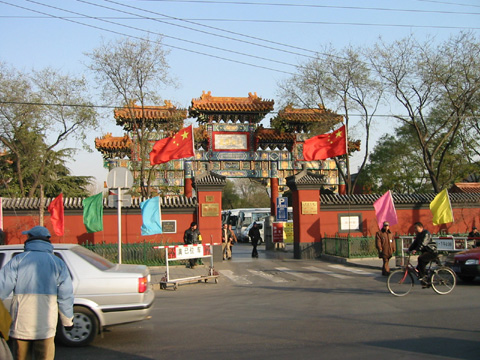
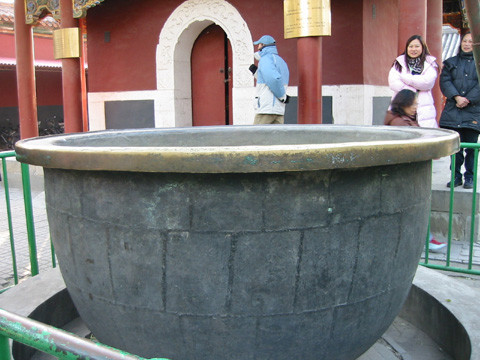
| The Lama Temple - Originally built as the an Imperial residence for Prince Yongzheng in 1694 and was converted into a Tibetan Buddhist Temple (Yellow Hat sect) in 1744. The temple has the world's largest Buddha made of sandalwood - 75 ft in height. | World's Biggest Bowl of Congee - This was used to make congee for the peasants during a time of famine by a Tibetan monk. | |
|
|
||
| The Road to Enlightenment - Five Halls in the complex with one interesting hall devoted to the Karma Sutra. This was where Prince Yongzheng learned the Sutras, later to be used with his concubines in the Forbidden City. The statues were all covered up with silk wrappings. Lots of Mongolian monks here. Genghis Khan, grandfather of Kublai Khan conquered Tibet and would later conquer Beijing just before his death in 1227. The Yellow Hat sect of Buddhism from Tibet was introduced to China by way of the Mongols. | ||
|
© 2002-2005 Stanley Yee |
||